september: sage scones
sham autumn

september doesn’t feel like fall. grouping september into the fall months gives me the same feeling as retail stores putting out halloween and thanksgiving merchandise in july. i suppose the same can be said for grouping february and march in with winter.
but the equinox arrived on thursday and the leaves are falling so i guess we have no other choice but to begin baking with squashes, sage and sweet potatoes. i won’t touch pumpkin until october, though. it’ll be worth the wait.
.—
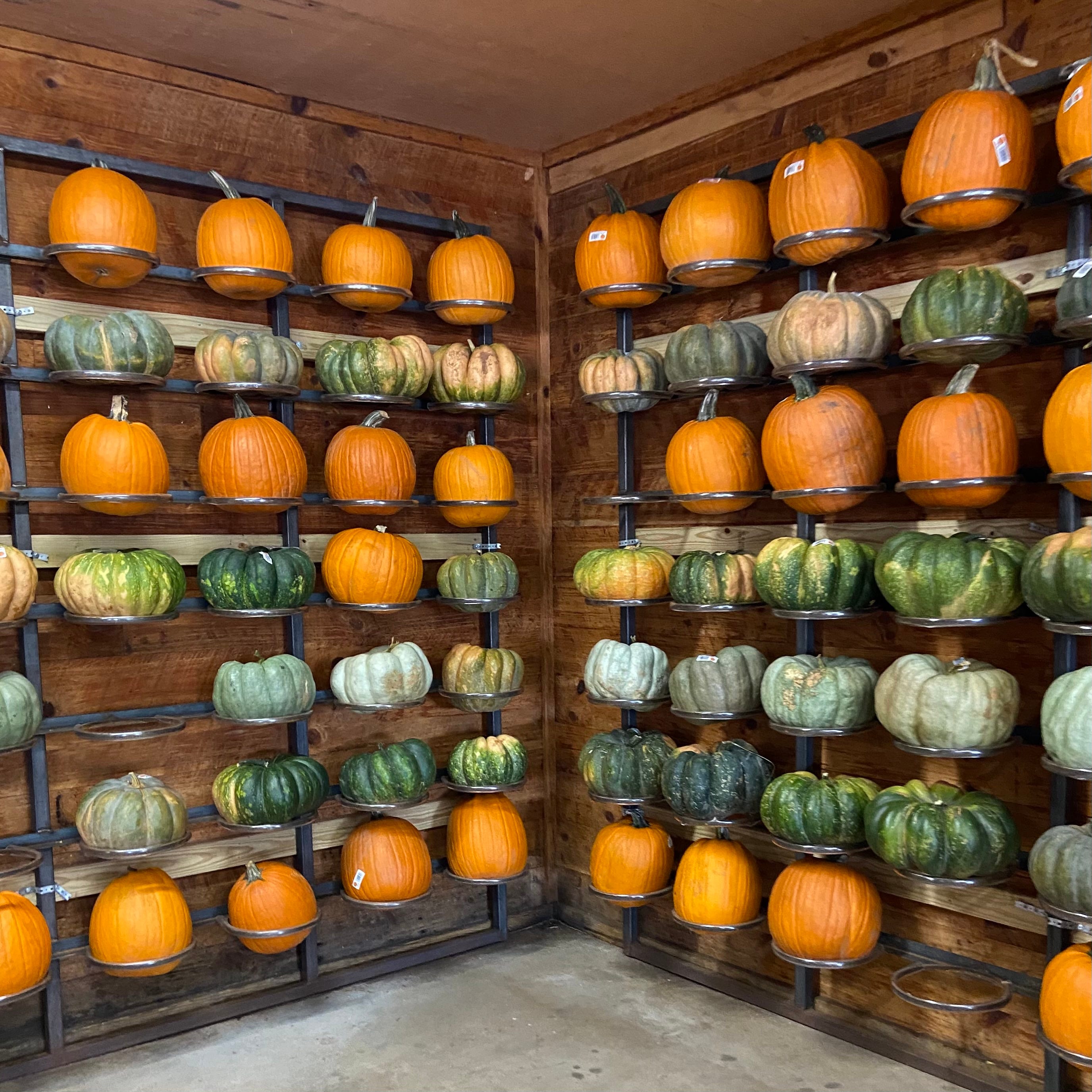
but before: isn’t it strange that the american use of pumpkins has been relegated to syrupy drinks, pies and jack o'lanterns (see: here)? and that the few savory applications rely on canned pumpkin? there’s nothing wrong with canned pumpkin — but why is pumpkin as a vegetable not as widespread as its acorn or butternut squash cousins?
perhaps it has something to do with the size. or the undertaking of turning a waxy pumpkin into something edible, which requires hacking, boiling, roasting and basting — it’s not as easy as throwing potatoes into the toaster oven or blitzing broccoli in the pan.
but it’s interesting to see the evolution of pumpkin from a crop you could describe as a workhorse into something that most people find frivolous. (to be fair: i am always thrown off guard when a “chef” — food creator? — outside of north america mentions casually making a meal with fresh pumpkin).
take this excerpt from abigail carroll’s Three Squares:
with numerous english foodstuffs unavailable in the colonies [...], although life was precarious, it would have been even more so without an abundance of pumpkins. lifesavers when other supplies were low, they proved, not surprisingly, monotonous.
eighteenth-century moravian missionaries on the indiana frontier lived for a time largely on pumpkin. they boiled it, mixed it with cornmeal and baked it. englishman jonathan carver noted that colonists used pumpkin “partly as a substitute for bread.” new englanders also relied heavily on pumpkins when more desirable staples were scarce. an anonymous seventeenth-century poem relays a prospect of endless servings as well as a sense of relief for a needed appetite appeaser: “we have pumpkins at morning and pumpkins at noon / if it were not for pumpkins we should be undone.”
in thinking about this, i figured i’d find some text in barbara kingsolver’s Animal, Vegetable, Miracle (which i am not the biggest fan of, by the way, but still keep my goodwill copy around on my bookshelf) that mentioned this same concern. i was right. kingsolver writes:
here’s an actual, healthy, native north american vegetable, non-shrink-wrapped, locally-grown, and in season, sitting in state on everybody’s porch. the little devil on my shoulder whispered, “oh yeah? you think people actually know it’s edible?”
i opened our local paper to the food section and found a two-page spread [with pumpkin recipes]. every single recipe started with the same ingredient: 1 can (15 oz) pumpkin.
doesn’t anybody remember how to take a big old knife, whack open a pumpkin, scrape out the seeds, and bake it? we can carve a face onto it, but can’t draw and quarter it? are we too squeamish to stab a large knife into a pumpkin? wait until our enemies find out.
it’s also interesting that americans’ consumption of winter squash tends to stay in the bounds of the season, as opposed to the fruits and vegetables that the grocery store will import from central america or east asia all year long. but isn’t that the appeal of pumpkin? that it only comes around once a year? so why would north america ruin the magic of the season by eating imported pumpkin during may and june?
—
i’m on the periphery of pumpkin. i’m teetering closer and closer to it.
my official start to the season made use of a two-or-three pound kabocha squash i’ve been hacking through all month. that’s the beauty of cooking with starchy vegetables with long storage lives. you can use a quarter of it in this recipe, another quarter in that recipe, and don’t have to rush to use it up before it spoils at the end of the week. i also had a bushel of fresh sage that needed to be used.
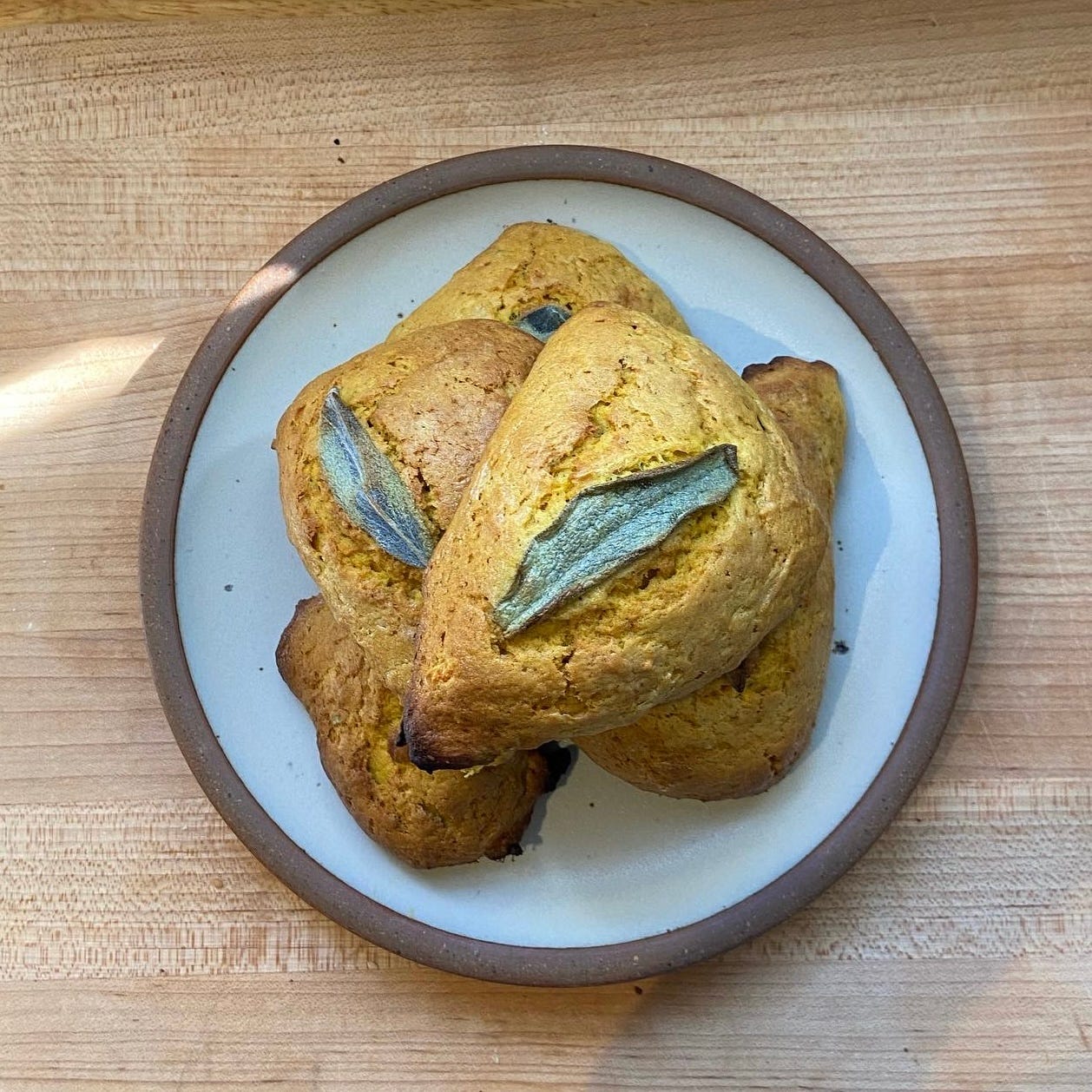
so, i made scones. spiced with ginger, nutmeg, cinnamon and clove. to be eaten on a hike through Desoto Falls.
i’m not a big fan of breakfast pastries or any kind of confections in the morning. i’ve had all but one scone in my life — one of the berry-buckwheat variety from the little tart before the pandemic — so i really can’t describe what the texture should be. and then there’s the debate of the american scone over the british variety: one should be flaky, the other should be breadlike.
these scones skewed toward the latter, which is partly due to the star ingredient of the recipe. any baked good using pumpkin or squash will inevitably come out cake-y, given the moisture content of the ingredient. regardless, they were very, very good.
kabocha squash-sage scones:
ingredients:
kabocha squash, 1/2 pound
all-purpose flour, 255 g (or two cups)
granulated sugar, 70g (or 6 tbsp)
baking powder, 1 tbsp
salt, 1/2 tsp
cinnamon, 1/2 tsp
nutmeg, 1/2 tsp
ground clove, 1/4 tsp
ground ginger, 1/4 tsp
chopped fresh sage, 2 1/2 tsp
cold unsalted butter, 85g (6 tbsp) — see note
heavy cream, 1/3 cup + 2 tbsp
egg, 1
steps:
PREPARE SQUASH:
you can do this the day before or the day of baking. if you are doing it the day of, give yourself an hour to two hours of time before you begin to bake.
cut squash into big enough hunks that it can stand upright with its skin on a pan. do not oil the squash. bake on 350-400 F until you can spear it with a fork. remove from the oven and let cool. this will take 45 minutes to an hour (or more, depending on the true temperature of your oven)
when cooled, take a spoon or spatula and scoop the flesh from the skin. if the squash does not separate easily, stick it back in the oven to bake further. measure the flesh out — you want * 1/2 cup * in total. if you have squash leftover, set aside and repurpose for something else.
place the flesh into a colander and salt lightly. you are coaxing moisture out of the squash. let sit for 30 minutes to two hours. put in a big mixing bowl until you are ready to use it.
GET STARTED:
mix together flour, sugar, baking powder and spices in a food processor. add the chopped sage.
add butter to the food processor. blitz until the butter is cut into the flour mixture. it will not be a fine mixture — you want chunks of butter bigger than the flour grind. if there are very large hunks of butter left in the mix, smash it with a fork. set aside. (SEE NOTE ^1 BELOW).
in the bowl with your squash, add 1/3 cup heavy cream and egg. whisk until combined.
add half of the flour mixture to the bowl and gently fold it into the wet. when the dough comes together, roll it out onto a counter dusted with flour and knead it lightly. the dough will be slick — add a liberal sprinkling of flour if it sticks to your hand. pat the dough into a circle and slice into six or eight pieces depending on the size you prefer.
pour 2 tbsp of heavy cream into a dish and brush the scones with it. optional: add a heavy cream-dredged sage leaf or turbinado sugar to the top. (i didn’t add the sugar).
transfer carefully onto parchment and bake at 400 for 20-25 minutes. watch carefully so the bottoms do not become charred (which is my signature baking move).
let cool. freeze them immediately if you plan on not eating them for the next few days.
NOTES:
^1 — an alternative to this is to freeze the 6 tbsp of butter (in one hunk, not cut) and grate it into the flour using a box grater. this works if you do not have a food processor or, like me, have one the size of a shoebox.
—
i tried to wait until i reached the top of Desoto Falls to eat them, but i was too eager to wait. nic and i ate them in the drive-thru of starbucks before we even left gainesville. what’s a hike through the mountains without spending $12 for coffee before you disappear into the elements?
a hike in 55 degree weather was the best way to start the season, even if it took spells of car sickness and bear sightings to get up the mountains.
the air was clear, lacked humidity and smelled of burning leaves, even though burn season doesn’t start until october. we climbed over fallen trees and crossed streams by stepping on stones. i convinced nic to fill his pockets with fragrant pine needles, which we immediately forgot about until they cartoonishly fell out hours later when he reflexively tried to empty them. we ran into some bikers from deland outside of a lodge at the top of the mountain who called me “a good kid” because i couldn’t remember the name of the town sheriff.
we celebrated accordingly by pulling into a gigantic ingles at the end of the mountain and buying fat green grapes maybe, probably, likely imported from chile.
—

the rest of september was a month full of apples, beans and pine trees. and squash, yes — the rest of the kabocha went into risotto and tortellini.
during the first week of september, i cried burnout. i was sick of cooking. living without a dishwasher (i’ve never had one, in fact) will do that to you once a quarter. i texted a friend that september felt like the stasis period between what is exciting about the summer season and the fall — the peaches have dried up, you’ve made enough stews with tomato to make yourself sick and have no idea what to do with turnips that have started showing up at the farmers market. her response: rely on “outside stuff” like nuts, chocolate, cheese and herbs.
so i made a lot of meals with eggs and rice and tofu and spinach, which are all ingredients that don’t require a lot of thinking to prepare. when the weather began to drop below 65 in the mornings, i made soups: chili with christmas lima beans, kale and white bean stew with italian sausage, tortellini in a parm broth, curry with okra. my ravioli stamp got some use with a mix of dried porcini mushrooms and ricotta.
apples felt safe for september, so i made apple cider donuts with homemade cider. i used rye flour to make a batch of chocolate chip cookies and smashed a scoop of salted caramel ice cream between two of them. i made brownies with pan di stelle, an italian palm oil-less competitor to nutella, because for all the complex flavors in the world to fold into egg whites and spread between wafers, sometimes the most satisfying is the most simple.
next month, i want to make use of the fig leaves outside of my apartment before they start falling; gnocchi with porcini mushrooms; more soups with split peas, chicken breasts and a lone can of coconut milk. it’s time to do something with the cannelli, cranberry, lima and cattle beans in my pantry, and to make room in my freezer.
for bakes: pumpkin and pear-ginger baked donuts, hojicha-cream filled bombolone, Halloweenish black sesame cupcakes and pear-ricotta muffins. and a pie. maybe. with pumpkin.
other stuff:
reads: molly wizenberg’s A Homemade Life, which felt around 100 pages too long until i got to an essay that made me cry. it was “Italian Grotto Eggs.” i’m have begun my biennial reread of The Secret History.
watching: elvis, which was all great fun, though nabbed me at my side like all baz luhrmann movies usually do. leaving parts unknown on in the background as white noise at night.
elsewhere: erstwhile athens haunt THE GRIT announced its closure this week. i liked the grit. the food was decent. you always knew someone who worked there. (talk to anyone that spent a few semesters washing dishes or waiting tables, however, and you’ll hear many a horror story). the grit seems to be at the center of a number of weird memories I have from college. a golden bowl was the first meal I had as a student at the university of georgia. my mom drove an hour from atlanta to buy me soup from the grit when my dog died. the bakery made my 21st birthday cake.